Enhancing Digital Projects with the 18 Video Game Illustration Collection
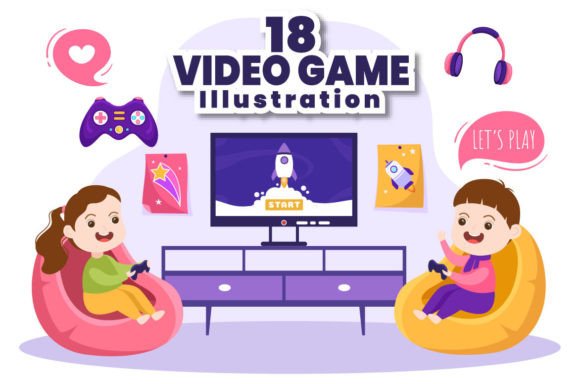
In the rapidly evolving landscape of digital content creation, finding visual assets that strike a balance between professional polish and approachable charm is a persistent challenge. Designers, marketers, and educators often struggle to locate imagery that accurately represents modern gaming culture without resorting to generic stock photography or overly complex 3D renders. The 18 Video Game Illustration set addresses this specific gap by offering a cohesive suite of flat, cartoon-style, hand-drawn templates. Featuring kids playing with gamepad controllers, fighting console setups, and interacting across Android mobile devices and computers, this collection provides a versatile foundation for a wide array of creative projects. Beyond the aesthetic appeal, the technical specifications—including fully editable AI, EPS 10, PSD, and transparent PNG formats—ensure that these assets remain functional tools rather than static decorations.
Visual Semantics in Modern Gaming Representation
The primary value of this illustration set lies in its specific artistic direction. The flat cartoon hand-drawn template style serves a distinct psychological purpose in user interface design and marketing. Unlike hyper-realistic renders which can sometimes feel cold or exclusionary, the hand-drawn aesthetic invites engagement. It signals creativity, fun, and accessibility. When depicting kids playing with gamepad controllers or gathered around a fighting console, the illustrations capture the emotional essence of gaming rather than just the hardware specifications.
This stylistic choice is particularly relevant for audiences targeting Gen Z and Gen Alpha, as well as millennial parents. The inclusion of Android mobile computers alongside traditional consoles reflects the current hybrid reality of gaming. Children and young adults rarely stick to a single platform; they transition seamlessly from a living room console to a mobile device. By visually representing this ecosystem, the 18 Video Game Illustration pack ensures relevance across multiple demographics. The "Video Game Room Interior" assets further ground these characters in a relatable environment, featuring comfortable armchairs and organized tech setups that mirror real-world gaming spaces. This attention to environmental detail adds narrative depth to what might otherwise be simple character cutouts.
Technical Versatility Across File Formats
For professionals and hobbyists alike, the utility of an asset pack is defined by its editability. A static image limits creativity, whereas a layered source file enables adaptation. This collection excels by providing multiple industry-standard formats tailored to different workflows:
- Vector AI and EPS 10: These are the cornerstone files for print designers and branding specialists. Being vector-based, they allow for infinite scaling without pixelation. Whether creating a massive convention banner or a small business card, the lines remain crisp. The EPS 10 compatibility ensures that users on older versions of Adobe Illustrator or alternative vector software like Affinity Designer can still access and modify the core geometry.
- Layered PSD Photoshop Files: For digital artists and web designers who prefer raster workflows, the included PSD files offer granular control. Because the files are layered, users can isolate specific elements—such as moving a gamepad controller to a different hand, changing the color of the armchair, or adjusting the background wall texture. This non-destructive editing capability significantly reduces production time compared to drawing similar scenes from scratch.
- PNG Transparent Backgrounds: Not every project requires deep editing. For rapid prototyping, presentation decks, or social media posts, the pre-rendered PNGs with transparent backgrounds serve as immediate plug-and-play assets. They retain high resolution while allowing for instant compositing over any colored or photographic background.
Practical Applications for Diverse Industries
The breadth of the 18 Video Game Illustration set allows it to transcend typical entertainment marketing. Understanding where and how to apply these assets can maximize return on investment for various stakeholders.
Educational Technology and E-Learning
Educators and instructional designers are increasingly gamifying learning experiences. However, finding age-appropriate, non-violent gaming imagery for educational platforms is difficult. The hand-drawn style of these illustrations softens the technological edge, making them perfect for K-12 learning management systems. Scenes depicting kids collaborating at a computer or engaging with a mobile device can illustrate concepts like digital literacy, teamwork, and problem-solving. The ability to edit colors means schools can align the illustrations with their specific brand guidelines or use color-coding to signify different learning modules.
Parenting Blogs and Family Safety Guides
Content creators focusing on family dynamics and digital safety require visuals that resonate with parents. Stock photos of gamers often look staged or intimidating. In contrast, the "Video Game Room Interior with Comfortable Armchairs" illustration evokes a sense of domestic comfort and safe supervision. Bloggers writing about screen time management, ergonomic setups for children, or co-playing strategies can use these images to break up text and maintain reader engagement. The friendly, cartoon aesthetic helps demystify gaming technology for parents who may not be gamers themselves.
App Development and UI/UX Design
Indie developers and app studios often lack the budget for custom art teams during the early stages of development. Using the 18 Video Game Illustration set as placeholder art or even final assets for casual mobile games can streamline production. The inclusion of Android mobile computer interactions makes these assets specifically useful for apps targeting the mobile-first market. Furthermore, because the files are fully editable, developers can swap out generic controllers for branded peripherals or adjust character clothing to match in-game avatars, maintaining visual consistency between marketing materials and the product itself.
Workflow Integration and Customization Strategies
To truly leverage the "fully editable" nature of this pack, users should adopt specific workflow strategies. Simply using the preview JPEGs ignores the vast majority of the asset's potential. The help file included with the package is an essential first stop; it details layer naming conventions and object grouping, which prevents confusion when navigating complex PSD or AI files.
When editing the object colors, consider the principles of color theory and accessibility. While the default palette is vibrant, certain combinations may not meet WCAG contrast standards if used in web interfaces with overlaid text. Utilizing the vector layers allows designers to adjust saturation and brightness globally across all 18 illustrations, ensuring a unified look for a comprehensive campaign. Additionally, the hand-drawn line work can be modified. If a project requires a cleaner, more corporate look, stroke weights can be reduced. Conversely, for a grunge or retro aesthetic, textures can be applied directly to the vector shapes within Illustrator.
Background manipulation is another critical feature. The "Video Game Room Interior" is detailed, but some projects require isolation. Because the PSDs are layered, removing the background to focus solely on the kids and their gear takes seconds. Alternatively, the background elements themselves can be repurposed. The comfortable armchairs or shelving units can be extracted and used as standalone props in other compositions, effectively multiplying the value of the initial purchase.
Considerations for Commercial and Personal Use
While the technical and aesthetic features are robust, users must always verify licensing terms specific to their intended application. The phrase "don't hesitate to contact us" found in the asset description highlights the importance of vendor communication. If a business intends to use these illustrations for merchandise resale, app icons, or large-scale advertising, clarifying commercial rights is mandatory. For hobbyists and researchers using the assets for non-profit presentations or internal documentation, the standard license typically suffices.
Furthermore, while the "hand-drawn" style is charming, it dictates a specific tone. These illustrations may not be suitable for hardcore military shooter promotions or serious cybersecurity threat reports. Contextual awareness is key. The assets shine brightest when the goal is to humanize technology, celebrate play, or explain concepts in a friendly manner. Matching the visual tone to the content message ensures that the 18 Video Game Illustration pack enhances rather than distracts from the core communication objective.
Optimizing Asset Performance in Digital Media
File size and optimization are practical concerns when integrating these illustrations into web and mobile environments. Although the source files are high-resolution vectors and large PSDs, the final output should be optimized for the delivery medium. When exporting from the transparent PNG or JPEG previews, users should utilize modern compression tools to reduce load times without sacrificing visual fidelity. SVG exports from the AI files are ideal for responsive web design, as they scale perfectly on everything from smartwatches to 4K monitors while keeping file sizes minimal.
For video content creators, the separated layers in the PSD and AI files open up opportunities for motion graphics. Individual elements like the gamepad controllers, character arms, or floating UI icons can be animated in After Effects or similar software. This transforms a static illustration pack into a dynamic motion design kit. A simple looping animation of a kid pressing buttons on a fighting console can serve as an engaging loading screen or video transition, adding significant production value with minimal effort.
Ultimately, the strength of the 18 Video Game Illustration collection is its adaptability. It acknowledges that gaming is no longer a niche subculture but a dominant form of global entertainment and social interaction. By providing high-quality, editable, and stylistically consistent assets, it empowers creators across education, business, and entertainment to tell authentic stories about this medium. Whether you are designing a syllabus, building a gaming lounge website, or developing a family-friendly app, these illustrations provide the visual vocabulary necessary to connect with a modern audience effectively.