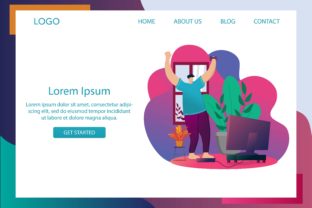
Evaluating the Landing Page Stay Home and Play Game Design for Modern Digital Campaigns
Selecting the right visual framework for a digital campaign requires balancing aesthetic appeal with technical versatility. The Landing Page Stay Home and Play Game concept has emerged as a distinct resource for marketers, developers, and content creators targeting audiences engaged in home-based entertainment. Unlike generic gaming templates, this specific design archetype focuses on the intersection of domestic comfort and interactive leisure. When evaluating this asset, professionals must consider not only its visual impact but also the practical implications of its file ecosystem. The availability of AI, EPS, PNG, JPG, SVG, and DXF formats suggests a level of adaptability that goes beyond simple web deployment, influencing everything from print marketing to laser-cut merchandise.
Defining the Distinct Characteristics of the Asset
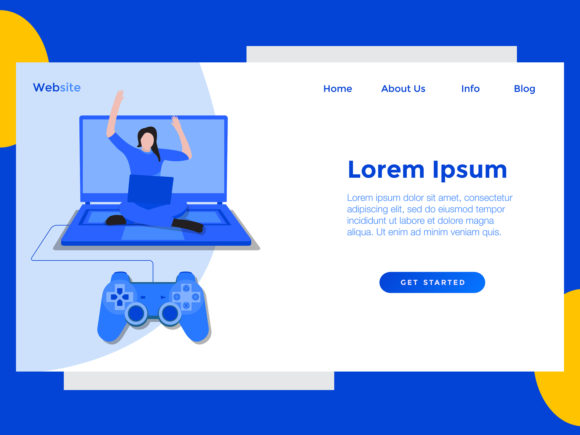
The Landing Page Stay Home and Play Game is more than a collection of pixels; it is a thematic template designed to evoke safety, relaxation, and engagement. In a market saturated with high-intensity, neon-drenched esports aesthetics, this option carves out a niche for casual gaming, family-oriented platforms, and wellness-focused digital experiences. Its primary distinction lies in its emotional resonance. While traditional gaming landing pages often prioritize adrenaline and competition, this style prioritizes accessibility and environment.
From a technical standpoint, the inclusion of source files like AI (Adobe Illustrator) and EPS (Encapsulated PostScript) indicates that this is a vector-based master design. This is a critical differentiator when comparing it to raster-only alternatives found on many stock photography sites. Vector masters allow for infinite scaling without quality loss, ensuring that the landing page hero image looks as crisp on a 4K monitor as it does on a mobile device or a large-format banner. The provision of DXF files further extends the utility into the physical realm, allowing brands to repurpose digital assets for signage, acrylic displays, or promotional merchandise without redrawing elements from scratch.
Comparing Format Utility and Technical Flexibility
When researching design resources, the file format list is often the most reliable indicator of long-term value. Understanding how each included format serves a specific function helps determine if the Landing Page Stay Home and Play Game aligns with your production workflow.
- AI and EPS: These are the editable source files. They are essential for teams that need to customize color palettes to match brand guidelines, swap out typography, or rearrange layout elements. If you lack access to Adobe Illustrator or compatible vector software, these files may be less immediately useful, though they retain high archival value for future designers.
- SVG: Scalable Vector Graphics are the web standard for responsive design. For a landing page focused on gaming, where load times directly correlate with bounce rates, SVG offers superior performance compared to heavy raster images. It allows for CSS animation and interaction, which is vital for creating an immersive "play" atmosphere directly on the landing page.
- PNG and JPG: These raster formats serve as immediate-use assets for social media ads, email newsletters, or quick mockups. PNG supports transparency, making it ideal for overlaying game characters or UI elements onto varied backgrounds. JPG remains the standard for photographic textures within the design, offering smaller file sizes for complex imagery.
- DXF: Drawing Exchange Format is unique in this bundle. It bridges the gap between digital design and CAD/CAM manufacturing. For gaming cafes, escape rooms, or home decor brands, this allows the landing page art to be translated into physical wall art or custom controller stands, creating a cohesive omnichannel brand experience.
Evaluating Fit Against Alternative Design Approaches
Professionals aged 20 to 50 often manage diverse portfolios and must decide when a specialized theme is appropriate versus when a broader solution is better. The Landing Page Stay Home and Play Game excels in specific contexts but may underperform in others when compared to alternative categories.
Specialized Thematic Templates vs. Generic Frameworks
Generic gaming templates offer maximum flexibility but often lack narrative cohesion. They provide structures for reviews, downloads, and forums without dictating a mood. In contrast, the stay-home theme provides an instant narrative. If your project involves promoting remote tournaments, cozy gaming setups, or educational games for children, the specialized asset reduces the time-to-launch significantly. However, if the goal is to promote a hardcore competitive shooter or a B2B game development tool, the softer aesthetic of this specific landing page style could create cognitive dissonance for the user. In such cases, a darker, more technical framework would be the superior choice despite potentially requiring more customization time.
Vector-Based Assets vs. Raster-Only Stock
Many budget-friendly alternatives rely exclusively on high-resolution JPGs or PSDs. While these can be visually stunning, they lock users into fixed dimensions and color schemes. The Landing Page Stay Home and Play Game package, by including AI and SVG, positions itself as a professional-grade resource. The tradeoff is complexity; editing vectors requires specific skills. Teams without vector design expertise might find a high-quality PSD mockup easier to manipulate in the short term, even if it sacrifices long-term scalability. The decision hinges on whether the team values immediate ease of use or future-proof adaptability.
Strengths and Tradeoffs in Practical Application
No design resource is without limitations. A balanced evaluation requires acknowledging where this asset shines and where it demands compromise.
Strengths:
- Cohesive Atmosphere: The design inherently communicates "comfort" and "accessibility," reducing the friction for non-traditional gamers.
- Cross-Media Consistency: The DXF and vector formats ensure that the visual identity remains consistent across web, print, and physical products.
- Performance Potential: Proper utilization of the included SVG files can result in faster page loads compared to template kits that rely heavily on unoptimized bitmap images.
- Editability: Full ownership of source files eliminates licensing ambiguities regarding modification and derivative works.
Tradeoffs and Limitations:
- Niche Appeal: The strong thematic focus makes it difficult to repurpose for unrelated industries without extensive redesign.
- Skill Requirement: Maximizing the value of AI/EPS/DXF files requires proficiency in vector graphics software and CAD tools.
- Content Dependency: The "stay home" narrative relies heavily on supporting copy and imagery. If the actual game content is aggressive or complex, the landing page may set incorrect expectations.
- Maintenance: Custom vector layouts require manual updates. Unlike CMS-driven templates where content flows automatically, significant changes to this design may require returning to the source file.
Decision Factors for Implementation
Determining whether to integrate the Landing Page Stay Home and Play Game into your strategy depends on several key variables. First, assess your audience's intent. Are they seeking escapism and relaxation, or are they looking for technical specifications and competitive rankings? This asset favors the former. Second, evaluate your technical capacity. Do you have team members comfortable working with DXF and AI files, or will you be reliant solely on the pre-rendered PNG/JPG versions? If the latter, calculate whether the static assets alone justify the investment compared to simpler alternatives.
Third, consider the longevity of the campaign. The "stay home" concept has evolved from a temporary necessity to a permanent lifestyle segment for many adults. If your product supports this enduring lifestyle shift—such as ergonomic furniture, home networking gear, or casual mobile games—the asset has lasting relevance. Conversely, if the campaign is tied to a fleeting trend, the specificity of the design might date quickly.
Best-Fit Scenarios and Use Cases
Based on comparative analysis, the Landing Page Stay Home and Play Game is ideally suited for the following scenarios:
- Indie Game Launches: Particularly for simulation, puzzle, or narrative-driven games where atmosphere matters more than graphical fidelity.
- Gaming Lifestyle Brands: Companies selling headsets, chairs, or snacks specifically marketed toward home users rather than tournament players.
- Community Events: Virtual conventions, charity streams, or online meetups that emphasize connection over competition.
- Educational Platforms: Gamified learning tools for adults or children where a welcoming, non-threatening interface is crucial for retention.
- Merchandise Lines: Brands utilizing the DXF file to create matching physical goods like enamel pins, stickers, or apparel that complement the digital presence.
In situations requiring aggressive conversion tactics, dark mode aesthetics, or dense data visualization, users should likely explore alternative resources. However, for projects aiming to build a warm, inviting, and versatile brand presence centered around home entertainment, this multi-format asset package offers a robust foundation. By leveraging the full spectrum of provided files—from web-ready SVGs to manufacturing-grade DXFs—teams can create a unified experience that transcends the screen, ultimately providing greater value than single-format alternatives.