Mastering Game UI Experience: The Invisible Art of Player Engagement
When we think about our favorite video games, our minds often drift to breathtaking landscapes, compelling narratives, or adrenaline-pumping combat mechanics. However, there is a silent conductor orchestrating every moment of that digital journey: the Game User Interface (UI) Experience. Unlike traditional web or app design, game UI is not merely a tool for navigation; it is an integral layer of the gameplay itself. It bridges the gap between the player’s intent and the game world’s response, serving as the primary language through which humans interact with complex digital systems.
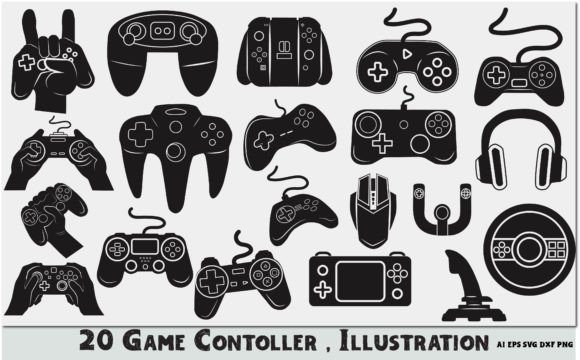
Understanding Game UI Experience requires looking beyond buttons and health bars. It involves exploring how visual communication, psychology, and technical constraints merge to create immersion. Whether you are an aspiring designer, a developer, or simply a curious gamer, grasping the fundamentals of this discipline reveals why some games feel effortless while others feel like a chore. Furthermore, for those studying or documenting these interfaces, access to high-fidelity assets is crucial. Professional analysis often requires resources where each illustration is separated in a zip file as a high resolution PNG file on a white background, ensuring that no watermark will appear on your downloaded illustrations. This level of clarity allows for a deeper appreciation of the craft, as the illustration you will receive will be rendered in a much higher quality than what you will see in the preview image.
Defining Game UI: More Than Just Menus
To understand Game UI Experience, we must first distinguish it from general User Experience (UX). In standard software design, the goal is often efficiency; users want to complete a task and leave. In gaming, the goal is engagement; players want to stay, explore, and feel. Game UI encompasses all visual elements that convey information to the player. This includes Heads-Up Displays (HUDs), inventory screens, maps, dialogue boxes, and even the main menu.
A common misunderstanding is that good UI should always be invisible. While minimalism has its place, many successful games utilize diegetic UI, where interface elements exist within the game world itself. For example, a character might check a physical watch to see the time rather than looking at a floating clock in the corner of the screen. This approach reinforces narrative immersion but introduces unique challenges in readability and accessibility. Conversely, non-diegetic UI overlays information directly onto the screen, prioritizing clarity over realism. Mastering the balance between these styles is the cornerstone of effective game UI experience.
The Four Categories of Game Interfaces
Scholars and designers often categorize game interfaces into four distinct types to better analyze their function:
- Diegetic: Elements that exist within the game space and story. Both the character and the player can perceive them (e.g., a holographic map projected from a wrist device).
- Non-Diegetic: Traditional overlays visible only to the player. These include health bars, ammo counters, and mini-maps.
- Spatial: UI elements that exist in the 3D game world but are not part of the narrative reality. Examples include glowing outlines around interactive objects or floating name tags above teammates.
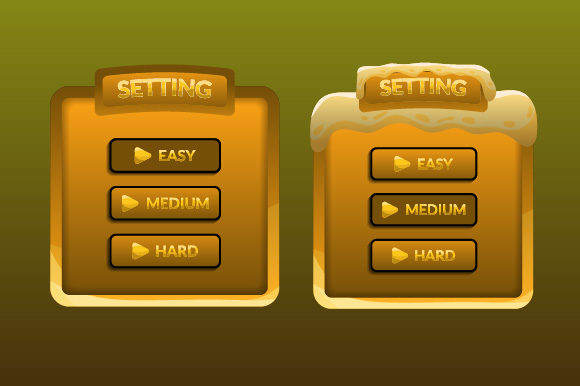
- Meta: Information that affects the player but exists outside the game's fiction, such as pause menus, settings screens, or damage vignettes indicating low health.
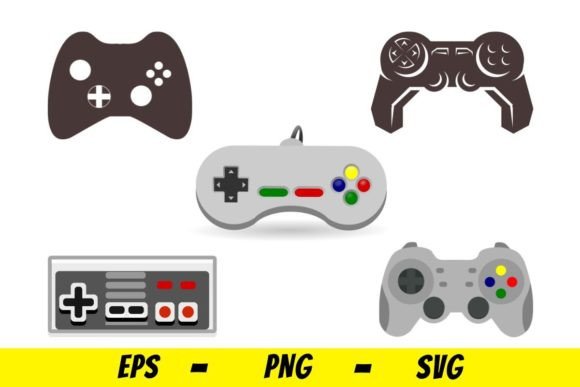
When studying these categories, having precise reference material is invaluable. When utilizing professional asset packs, remember that you will receive – Images PNG – Vector EPS formats. This versatility allows educators and designers to scale illustrations without losing fidelity, making it easier to dissect the anatomy of a HUD or the typography of an inventory screen during presentations or publications.
The Psychology of Feedback and Flow
Great Game UI Experience is rooted in cognitive psychology. Players operate in a state of "flow," a mental zone of focused immersion. Poor UI breaks this flow by forcing the player to decipher confusing icons or navigate clunky menus. Effective UI, conversely, leverages established mental models to reduce cognitive load.
Feedback loops are essential here. Every action a player takes must have an immediate, understandable reaction. If a player presses a button to attack, the UI should confirm this through animation, sound, or visual flair. This concept, known as "juice," makes the interface feel alive. Consider the difference between a static health bar decreasing and a dynamic bar that shakes, changes color, and pulses when damage is taken. The latter communicates urgency and emotional stakes far more effectively than raw data alone.
Furthermore, color theory plays a massive role in instant recognition. Red universally signals danger or enemy presence, while green or blue typically indicates safety, allies, or resources. Deviating from these norms without clear contextual cues can lead to frustration. Designers must test their color palettes not just for aesthetic harmony, but for functional clarity across different display types and lighting conditions.
Accessibility as a Core Pillar
Modern Game UI Experience cannot be discussed without addressing accessibility. Historically, game interfaces were designed with a narrow demographic in mind. Today, inclusive design is recognized not as a niche feature, but as a fundamental aspect of quality. This goes beyond simple font sizing.
- Color Blindness Modes: Relying solely on color to convey information excludes millions of players. Patterns, shapes, and text labels must serve as redundant indicators.
- Remappable Controls: UI navigation must support diverse input methods. A menu designed exclusively for a mouse may be unusable for someone relying on adaptive controllers.
- Text Legibility: High contrast ratios and scalable text are non-negotiable. Fancy, stylized fonts may look thematic, but if they cannot be read quickly during intense gameplay, they fail their primary purpose.
- Cognitive Accessibility: Options to simplify HUDs, disable flashing effects, or provide objective markers help players with attention deficits or sensory processing sensitivities enjoy the experience.
Implementing these features requires rigorous testing and high-quality mockups. When reviewing design iterations, professionals rely on assets where each illustration is separated in a zip file as a high resolution PNG file on a white background. This organization streamlines the workflow, allowing teams to swap out UI components rapidly during accessibility audits without dealing with cluttered layers or low-resolution placeholders.
The Intersection of Art and Technology
Game UI sits at a unique intersection where artistic expression meets strict technical limitations. Unlike print design, game UI must render in real-time, often at 60 frames per second or higher. Every texture, shader, and animation impacts performance. Designers must optimize their work relentlessly, balancing visual richness with memory budgets.
This technical constraint influences artistic style. Vector-based graphics have seen a resurgence because they scale perfectly across resolutions from mobile phones to 4K monitors without increasing file size significantly. Understanding vector workflows is essential for modern UI artists. This is why comprehensive resource kits ensure that you will receive – Images PNG – Vector EPS files. Having the source vector files allows designers to modify curves, adjust colors, and repurpose assets for different platforms without starting from scratch.
Moreover, the rise of cross-platform play has complicated UI design. An interface must be intuitive whether controlled by a precision mouse, a gamepad, or a touchscreen. Responsive game UI adapts layouts dynamically based on the detected input method. Button prompts change instantly, and menu density adjusts to accommodate the varying precision of thumbsticks versus cursors. This adaptability is the hallmark of contemporary Game UI Experience.
Common Misconceptions About Game UI
Despite its importance, several myths persist regarding game interface design:
- "UI is just decoration added at the end." In reality, UI design should begin in pre-production. Information architecture dictates game mechanics; you cannot design a combat system without knowing how the player will manage resources or select abilities.
- "Minimalist UI is always better." While clean aesthetics are popular, excessive minimalism can obscure vital information. Complexity is acceptable if it matches the game's depth. A grand strategy game needs dense data tables; a horror game might need almost nothing.
- "Players don't notice good UI." Players absolutely notice good UI, usually by feeling satisfied and competent. They only vocalize complaints when UI fails. Positive feedback manifests as retention and enjoyment, not necessarily praise for the menus.
Practical Relevance in Modern Digital Life
The principles of Game UI Experience extend far beyond entertainment. Gamification in education, enterprise software, and fitness apps borrows heavily from game design patterns. Progress bars, achievement badges, and responsive feedback loops are all game UI concepts applied to non-game contexts to boost motivation and engagement.
For businesses, understanding these principles can transform dry dashboards into engaging tools. For educators, applying game UI logic can make learning management systems less daunting for students. As technology becomes increasingly immersive through VR and AR, the lessons learned from decades of game UI development become foundational knowledge for all interaction designers.
In conclusion, Game UI Experience is a multifaceted discipline that blends art, psychology, engineering, and empathy. It is the lens through which players perceive virtual worlds. Whether you are creating the next indie hit or analyzing interface trends for academic purposes, quality resources matter. Always seek out professional-grade assets where the illustration you will receive will be rendered in a much higher quality than what you will see in the preview image, and where no watermark will appear on your downloaded illustrations. By respecting the craft and utilizing the right tools, we can continue to push the boundaries of how humans interact with digital experiences, making them more intuitive, inclusive, and profoundly enjoyable.