Evaluating the Numbers Matching Game for Early Learning
Selecting appropriate educational resources for early childhood development requires balancing engagement with pedagogical value. The Numbers Matching Game, specifically formatted as a cut-and-paste printable activity, represents a distinct category of hands-on learning tools. Unlike digital applications or pre-manipulative toys, this resource relies on physical interaction with paper-based materials to reinforce number recognition and one-to-one correspondence. For parents, educators, and homeschoolers evaluating this type of activity, understanding its specific utility, logistical requirements, and developmental alignment is essential for making an informed decision.
Defining the Resource and Its Core Function
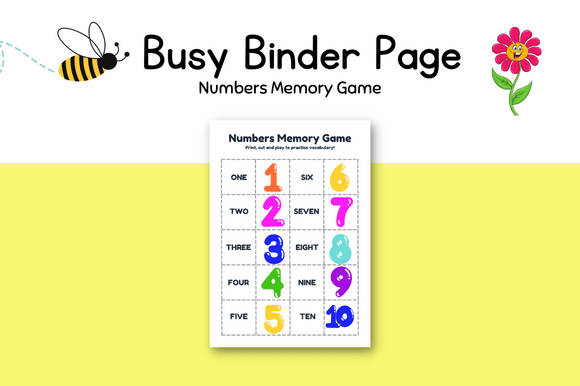
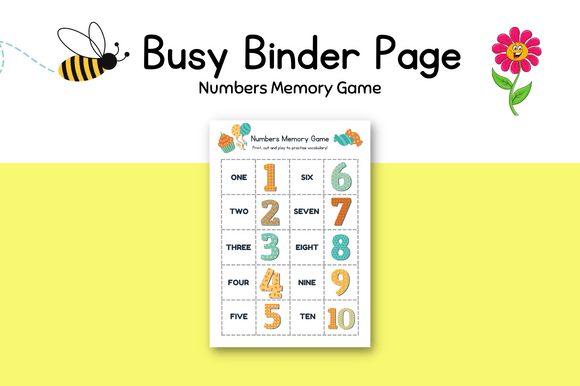
A Numbers Matching Game in this context refers to a printable worksheet or set of cards designed for tactile assembly. Typically provided in both PNG and PDF formats, the resource allows users to print high-resolution visuals at home or in a classroom setting. The primary mechanic involves cutting out individual number symbols and their corresponding representations—such as groups of objects, tally marks, or ten-frames—and pasting them together in correct pairs.
This format distinguishes itself from simple coloring sheets or traceable worksheets by incorporating fine motor manipulation as a core component of the learning process. The dual-file offering serves different technical needs: the PDF ensures consistent formatting and sizing across various devices for reliable printing, while the PNG offers flexibility for digital integration or custom resizing within other document creation software. When evaluating this resource, it is important to recognize it not merely as a math exercise, but as a multi-sensory activity that bridges visual recognition with physical dexterity.
Developmental Benefits and Educational Value
The decision to utilize a cut-and-paste numbers matching activity often stems from specific developmental goals. Research in early childhood education supports the efficacy of kinesthetic learning for numeracy acquisition. The benefits extend beyond rote memorization:
- Fine Motor Development: The act of scissor cutting and glue application strengthens hand muscles and improves bilateral coordination, which are foundational skills for future handwriting.
- Cognitive Processing: Matching requires the brain to analyze visual data, compare attributes, and make logical connections between abstract symbols (numerals) and concrete quantities.
- Focus and Attention: Unlike passive screen-based learning, the physical nature of cutting and pasting demands sustained attention and task completion, helping to build executive function skills.
- Error Correction: Physical manipulatives allow children to visually assess their work before finalizing it with glue, promoting self-regulation and problem-solving.
For learners who struggle with sedentary desk work or abstract concepts, this tactile approach provides a necessary bridge. The physical weight of the paper and the resistance of the scissors provide sensory feedback that can enhance memory retention compared to purely visual or auditory instruction.
Logistical Considerations and Tradeoffs
While the educational merits are significant, practical evaluation must include an assessment of resource investment. Print-at-home resources shift the burden of production from the publisher to the user. Evaluators should weigh the following tradeoffs:
Material Costs and Consumption: Regular use of cut-and-paste activities consumes paper, ink, scissors, and adhesive. Over time, these costs can accumulate. Users must determine if the single-use nature of a worksheet aligns with their budget and sustainability preferences compared to reusable plastic or wooden manipulatives.
Preparation Time: This activity is not instant. It requires printing, potential laminating (if reusability is desired), and setup/cleanup time. For educators managing large groups or parents with limited bandwidth, the preparation overhead may be a limiting factor.
Skill Prerequisites: Cutting and pasting require a baseline level of motor control. If a child has not yet developed safe scissor skills or the ability to manage liquid glue, the activity may become frustrating rather than educational. In such cases, the cognitive load of the motor task may overshadow the mathematical learning objective.
Situational Fit: When This Resource Is Ideal
The Numbers Matching Game is particularly well-suited for specific educational contexts. It serves as a strong fit when:
- Integrating Cross-Curricular Skills: You aim to combine math practice with occupational therapy goals or art integration.
- Differentiating Instruction: You need a low-stakes, self-paced activity for independent centers or quiet time that does not require adult facilitation once introduced.
- Assessment and Documentation: The finished product serves as tangible evidence of learning for portfolios, parent conferences, or IEP progress monitoring.
- Budget-Constrained Environments: High-quality commercial manipulatives are cost-prohibitive, and a printable alternative offers immediate access to structured curriculum materials.
- Remote or Hybrid Learning: Digital files (PNG/PDF) facilitate easy distribution to families learning at home without requiring shipping or physical pickup.
When to Consider Alternatives
Despite its versatility, a print-at-home matching game is not universally optimal. Evaluators should consider alternative resources in the following scenarios:
- High-Frequency Repetition Needed: If the goal is daily drill or rapid fluency building, the consumable nature of paper makes this inefficient. Reusable dry-erase boards, magnetic tiles, or vetted educational apps offer better long-term value for repetitive practice.
- Severe Motor Delays: For children with significant physical limitations, standard cutting and pasting may be inaccessible. Adapted manipulatives with larger grips or switch-accessible digital alternatives may be more inclusive.
- Environmental Constraints: In settings where mess management is critical or waste reduction is a priority, digital interactive whiteboard activities or laminated velcro systems eliminate paper waste and cleanup.
- Advanced Learners: Children who have already mastered one-to-one correspondence up to the target number range may find simple matching tedious. These learners may benefit more from open-ended problem-solving tasks or games involving addition and subtraction strategies.
Making the Final Decision
Evaluating the Numbers Matching Game ultimately depends on aligning the resource's characteristics with your specific instructional goals and operational constraints. The availability of both PNG and PDF formats suggests a degree of adaptability that favors users who customize their materials or operate across mixed digital-print environments.
If your priority is developing foundational numeracy alongside fine motor skills in a flexible, low-cost format, this resource likely meets your criteria. However, if durability, reusability, or zero-prep implementation are paramount, you may wish to supplement or replace this printable option with physical manipulatives. By objectively assessing these factors against your unique context, you can determine whether this cut-and-paste activity serves as a primary instructional tool or a supplementary reinforcement strategy within a broader early mathematics curriculum.