Multiplayer Game: Selecting the Right Visual Assets for Digital Projects
When we discuss the concept of a Multiplayer Game in the context of digital design and content creation, we are often looking at two distinct but overlapping needs. For gamers and community managers, it represents the social ecosystem of interactive entertainment. However, for designers, marketers, and developers, "Multiplayer Game" frequently refers to the specific visual language used to represent that ecosystem. Whether you are building a landing page for a new co-op title, designing an esports tournament bracket, or creating educational material about gaming culture, the quality of your iconography matters immensely. The search for the perfect multiplayer game glyph icon, video games and gamepad illustrations, or game consoles sign vector graphics is not just about finding a pretty picture; it is about ensuring technical compatibility and visual clarity across various media.
A common point of confusion arises when creators treat all gaming assets as interchangeable. They are not. A stylized, neon-drenched raster image might look fantastic on a dark-mode website header, but it will fail catastrophically when scaled down for a mobile app button or printed on a matte paper flyer. Understanding the distinction between decorative art and functional UI elements is the first step toward professional results. This is where specific technical specifications, such as editable stroke solid icons and EPS 10 compatibility, become critical decision-making factors rather than mere file format jargon.
The Technical Trap of Non-Editable Vector Graphics
One of the most frequent mistakes made by intermediate designers and small business owners is downloading vector files without verifying if the strokes are truly editable. You might find a perfect multiplayer game glyph icon that visually matches your brand, only to discover upon opening it in Adobe Illustrator or Affinity Designer that the lines have been expanded into shapes. While expanded shapes are useful for final printing, they are detrimental during the design phase. If you cannot adjust the stroke weight, you cannot match the icon to your typography. A heavy, bold font paired with a thin, unchangeable icon creates visual dissonance that subconsciously signals low quality to your audience.
Always prioritize assets labeled as editable stroke solid icon. This designation ensures that the path data remains intact, allowing you to thicken lines for better visibility on high-DPI screens or thin them out for a minimalist aesthetic. This flexibility extends the lifespan of the asset significantly. Instead of purchasing five different variations of a gamepad symbol for different contexts, one editable master file can serve every need from favicon to billboard. Overlooking this detail often leads to redundant spending and inconsistent branding across platforms.
Version Compatibility and the EPS 10 Standard
File format compatibility is another area where practical foresight prevents workflow disasters. While SVG has become the web standard, many stock libraries and professional print shops still rely heavily on Encapsulated PostScript (EPS). Specifically, you should look for EPS 10 versions when acquiring game consoles sign vector graphics or complex multiplayer diagrams. Newer versions like EPS 2024 or AI-native formats may contain transparency effects, mesh gradients, or proprietary layer structures that older RIP software, embroidery machines, or legacy design suites cannot interpret correctly.
Choosing an EPS 10 file acts as a universal translator. It strips away modern complexities that cause rendering errors while retaining true vector scalability. I have seen numerous projects delayed because a designer downloaded a cutting-edge vector file that their client’s vintage signage software could not open. By sticking to the EPS 10 standard for foundational assets like video games and gamepad silhouettes, you ensure that the asset remains usable regardless of the output technology. This is particularly vital for entrepreneurs and freelancers who must deliver files to clients with varying technical setups.
Semantic Clarity in Multiplayer Iconography
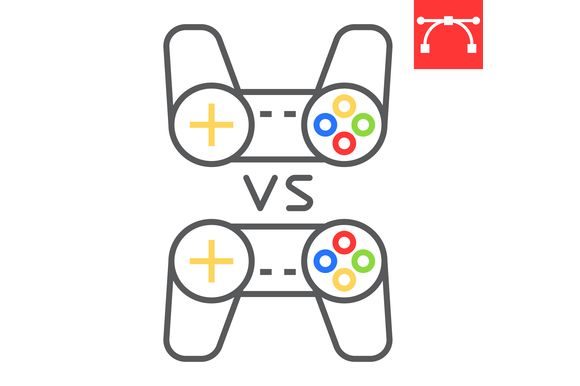
Beyond technical specs, there is the issue of visual communication. A "Multiplayer Game" icon must convey connection, not just hardware. A common error is using a generic single-player controller icon to represent a multiplayer experience. This fails to communicate the core value proposition of social interaction. Effective multiplayer game glyph icons utilize specific semantic cues: dual controllers, connected nodes, speech bubbles integrated with headsets, or split-screen compositions. These visual shorthand elements instantly differentiate a solo experience from a communal one.
When evaluating assets, ask yourself if the icon reads clearly at 32x32 pixels. Complex illustrations of game consoles with intricate button details often turn into muddy blobs at small sizes. For UI navigation, app icons, or bullet points, simplicity reigns supreme. Reserve detailed vector art for hero sections or background textures. Using highly detailed vectors in functional spaces is a misuse of the asset that degrades user experience. Test your chosen icons at multiple scales before committing them to your design system. If the silhouette is not recognizable when squinting, it is too complex for primary navigation.
Evaluating Licensing for Commercial Gaming Content
The legal landscape of gaming imagery is uniquely treacherous. Many creators assume that a generic-looking gamepad vector is safe to use commercially, only to face issues later because the design was too derivative of a trademarked console shape. When selecting game consoles sign vector graphics, scrutinize the design for intellectual property risks. Does the controller have the exact button layout and distinctive curves of a patented Sony or Nintendo device? Even in vector form, recognizable trade dress can be problematic.
Safer alternatives include:
- Generic Silhouettes: Abstracted controller shapes that suggest "gaming" without mimicking specific hardware.
- Customizable Strokes: Using editable stroke solid icons to alter proportions enough to create a unique, non-infringing asset.
- Retro Aesthetics: Older console designs whose patents have expired or entered the public domain.
- Symbolic Representation: Focusing on hands holding devices or abstract connectivity symbols rather than the hardware itself.
This due diligence protects your project from takedown notices and legal headaches. It also forces more creative solutions that often result in stronger, more original branding. Remember that stock libraries vary wildly in their vetting processes; what is listed as "royalty-free" is not always "risk-free." Always cross-reference visual similarity against current market hardware.
Integration Strategy for Diverse Audiences
Finally, consider how these assets function within your broader content strategy. Adults aged 20–50 engage with gaming content differently than younger demographics. Nostalgia, professionalism, and clarity often resonate more than chaotic, hyper-saturated visuals. When integrating multiplayer game glyphs into a blog, course, or marketing campaign, align the visual tone with the textual message. A corporate team-building article featuring arcade games requires clean, flat, solid icons that feel organized and approachable. A retro-gaming review site might benefit from pixel-art inspired vectors that evoke specific eras.
Mixing styles is another pitfall to avoid. Combining a hand-drawn sketch style gamepad with a rigid, geometric multiplayer diagram creates a disjointed user interface. Establish a visual rule set early: decide on corner radius, stroke width, and fill style, then apply those rules consistently across all gaming assets. If you download a pack of video games and gamepad vectors, take the time to normalize them. Use the editable stroke features to unify line weights. Adjust colors to match your palette exactly rather than relying on default stock colors. This extra hour of refinement separates amateur presentations from professional deliverables.
Ultimately, treating "Multiplayer Game" assets with the same rigor as any other design element yields better outcomes. It transforms generic clipart into intentional communication tools. By prioritizing editable formats like EPS 10, respecting semantic clarity, navigating IP concerns carefully, and maintaining stylistic consistency, you ensure that your visual content supports rather than distracts from your message. Whether you are selling a product, teaching a class, or building a community, these technical and strategic considerations form the foundation of effective visual storytelling in the gaming space.