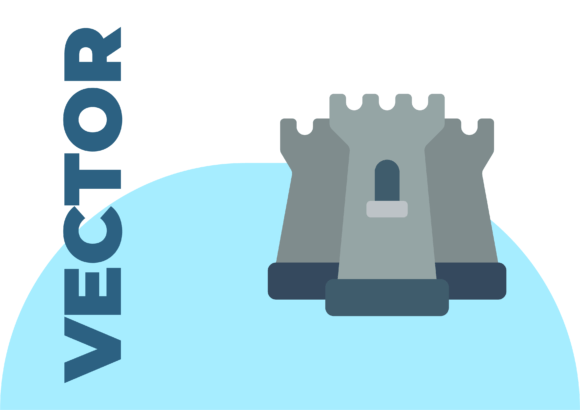
Understanding Game UI Castle Assets: A Guide to High-Resolution Interface Design
In the expansive world of video game development, the user interface (UI) serves as the critical bridge between the player and the digital experience. While gameplay mechanics and narrative often steal the spotlight, it is the UI that dictates how smoothly a player navigates menus, manages inventory, and interacts with game systems. Among the myriad of aesthetic styles available to designers, the "Game UI Castle" theme remains a perennial favorite for fantasy RPGs, strategy games, and adventure titles. However, acquiring these assets is only half the battle; understanding the technical specifications and practical applications of high-resolution deliverables is what separates amateur projects from professional productions.
For developers and artists seeking to elevate their projects, sourcing premium Game UI Castle illustrations is a strategic investment. When you acquire a professional asset pack, you are not merely downloading pictures; you are integrating a comprehensive design system. It is vital to understand that each illustration is separated in a zip file as a high-resolution PNG file on a white background, ensuring maximum flexibility during the implementation phase. Furthermore, professional marketplaces guarantee that no watermark will appear on your downloaded illustrations, providing a clean, commercial-ready foundation for your game’s interface.
The Significance of Thematic Consistency in UI Design
Before diving into technical file formats, it is essential to understand why the castle motif is so prevalent and significant in game design. The castle represents safety, progression, hierarchy, and history. In a user interface, these concepts translate directly into player psychology. A main menu framed by stone masonry suggests stability and epic scale. An inventory screen backed by wooden beams and iron hinges implies tactile weight and resource management.
Thematic consistency builds immersion. If a player is exploring a medieval fantasy world but interacts with sleek, neon-blue sci-fi menus, the cognitive dissonance can break the suspension of disbelief. Game UI Castle assets provide the visual vocabulary necessary to maintain this immersion. They act as environmental storytelling elements even when the player is paused in a settings menu. For beginners, this underscores a crucial lesson: UI is not separate from the game world; it is an extension of it. Experienced designers know that the best interfaces feel like diegetic elements—objects that could logically exist within the game's universe rather than overlays pasted on top of it.
Bridging the Gap Between Preview and Production Quality
A common point of confusion for those new to purchasing digital art assets is the discrepancy between what is seen in a store listing and what is received after purchase. Previews are intentionally compressed to protect intellectual property and reduce page load times. However, the illustration you will receive will be rendered in a much higher quality than what you will see in the preview image. This distinction is paramount for modern game development.
Modern displays range from standard 1080p monitors to 4K televisions and high-DPI mobile devices. An asset that looks acceptable at 72 DPI on a web browser may appear pixelated or blurry when stretched across a retina display or a large TV screen. High-resolution source files ensure that textures remain crisp, edges stay sharp, and details like stone grain or metal rust are preserved. This fidelity allows developers to future-proof their projects. Even if you are currently developing for a lower resolution target, having high-quality masters allows you to upscale or remaster the game later without needing to recommission entirely new artwork.
Technical Deliverables: PNG vs. EPS Vector Files
When you invest in professional Game UI Castle assets, the value proposition lies in the versatility of the deliverables. Typically, you will receive Images PNG and Vector EPS files. Understanding the specific utility of each format is essential for an efficient workflow.
The Role of High-Resolution PNGs
PNG (Portable Network Graphics) is the industry standard for raster-based game UI. The key feature here is lossless compression and alpha channel support. Because each illustration is separated in a zip file as a high-resolution PNG file on a white background, designers have immediate access to individual components. The white background specification is particularly useful for certain compositing techniques and ensures color accuracy, though most game engines utilize the alpha channel for transparency.
- Texture Detail: PNGs preserve the hand-painted or rendered details of stone, wood, and metal that vectors sometimes struggle to replicate authentically.
- Engine Compatibility: Unity, Unreal Engine, Godot, and other major platforms ingest PNGs natively as sprites or textures.
- Layer Separation: Receiving separated files means you do not have to spend hours masking out a button frame from a complex background. The asset creator has already done the heavy lifting.
The Power of Vector EPS Files
While PNGs handle texture, EPS (Encapsulated PostScript) files handle geometry. Vectors are mathematical representations of shapes that can be scaled infinitely without losing quality. In the context of Game UI Castle assets, vectors are invaluable for creating responsive layouts.
- Scalability: Need a banner that stretches across a wide monitor but also fits a portrait-mode mobile phone? Vectors allow you to resize frames without distortion.
- Customization: Using software like Adobe Illustrator or Affinity Designer, you can modify the shape of a shield icon, change the curve of a scroll, or adjust the thickness of a border to match your specific game’s art direction.
- Clean Edges: For text boxes and simple geometric frames, vectors provide mathematically perfect anti-aliasing that raster images cannot always achieve at varying resolutions.
Practical Application in Modern Development Workflows
Integrating these assets goes beyond simply dragging and dropping files into a project folder. Professional development requires a structured approach to asset management. Because the files arrive in a ZIP archive with separated components, organization is the first step. Establishing a clear naming convention and folder hierarchy early prevents technical debt later. For example, grouping assets by function (e.g., /Buttons, /Frames, /Backgrounds, /Icons) mirrors how most game engines organize sprite atlases.
Furthermore, the absence of watermarks on downloaded illustrations facilitates rapid prototyping. In the early stages of development, teams often use placeholder art. However, placeholders can sometimes mislead stakeholders about the final visual quality. By using licensed, watermark-free high-quality assets from the start, playtesters and investors get an accurate representation of the intended player experience. This clarity is crucial for securing funding or gathering meaningful feedback on usability.
Addressing Common Misunderstandings
There is a prevailing assumption among beginners that buying a UI pack means the design work is "done." This is a misconception. Asset packs are foundations, not finished products. A Game UI Castle pack provides the bricks and mortar, but the architect must still design the building. You must consider readability, accessibility, and interaction feedback. A beautifully rendered stone button is useless if players cannot tell it is clickable or if the text contrast against the stone texture fails accessibility standards.
Another misunderstanding involves licensing and usage. Always verify the specific license terms associated with your download. While the files are watermark-free and high-quality, licenses dictate whether you can use them in commercial projects, how many end-products you can create, and whether you can redistribute modified versions. Respecting these terms protects your studio from legal complications and supports the artists who create these essential resources.
The Broader Impact on Creativity and Business
From a business perspective, utilizing high-quality pre-made assets is a matter of resource allocation. Creating bespoke UI art from scratch requires hundreds of hours of specialized labor. By leveraging professional Game UI Castle assets, studios can redirect budget and time toward unique gameplay mechanics or narrative content. This efficiency does not equate to laziness; it equates to smart production management. It allows indie developers to compete visually with larger studios while maintaining a sustainable development cycle.
Educationally, dissecting professional asset packs is one of the best ways to learn UI design. By examining how a professional artist separates layers, constructs nine-slice frames, and balances color values in a high-resolution PNG, aspiring designers gain insights that tutorials often overlook. The vector EPS files serve as masterclasses in efficient path construction and shape design. In this way, the asset pack serves a dual purpose: it is both a production tool and an educational resource.
Ultimately, the choice to utilize specialized Game UI Castle illustrations reflects a commitment to quality and player experience. Whether you are a solo developer crafting your first RPG or a seasoned art director streamlining a production pipeline, understanding the technical and creative nuances of these assets is essential. The combination of high-resolution PNGs for texture and EPS vectors for scalability, delivered without watermarks and organized for immediate use, provides the robust toolkit necessary to build immersive, functional, and beautiful game interfaces. By mastering these resources, creators ensure that the gateway to their digital worlds is as compelling as the adventures that lie beyond.